Persistent Live Operations
The header follows the active service through Dashboard, Plans, Scripts, and Schedule. It is status/navigation—not a second place to adjust the timer.
Learn Plans, Service Timer, Controller, Team Companion, Displays, Live Operations, Scripts, rehearsal, and reporting—or contact Support when you still need help.
These are the operational behaviors most likely to matter during a live service.
The header follows the active service through Dashboard, Plans, Scripts, and Schedule. It is status/navigation—not a second place to adjust the timer.
Ending a service and starting another from the same Service Timer page resets per-session control revisions and ignores late responses from the old session.
Choose Cancel, End without report, or End + generate report. Ending always closes the live service cleanly.
Organization Live Operations can show multiple active timers—even when two Live Sessions are running inside the same Workspace.
Choose the right account path, identify your Workspace, and understand how the main ServiceTimer surfaces fit together.
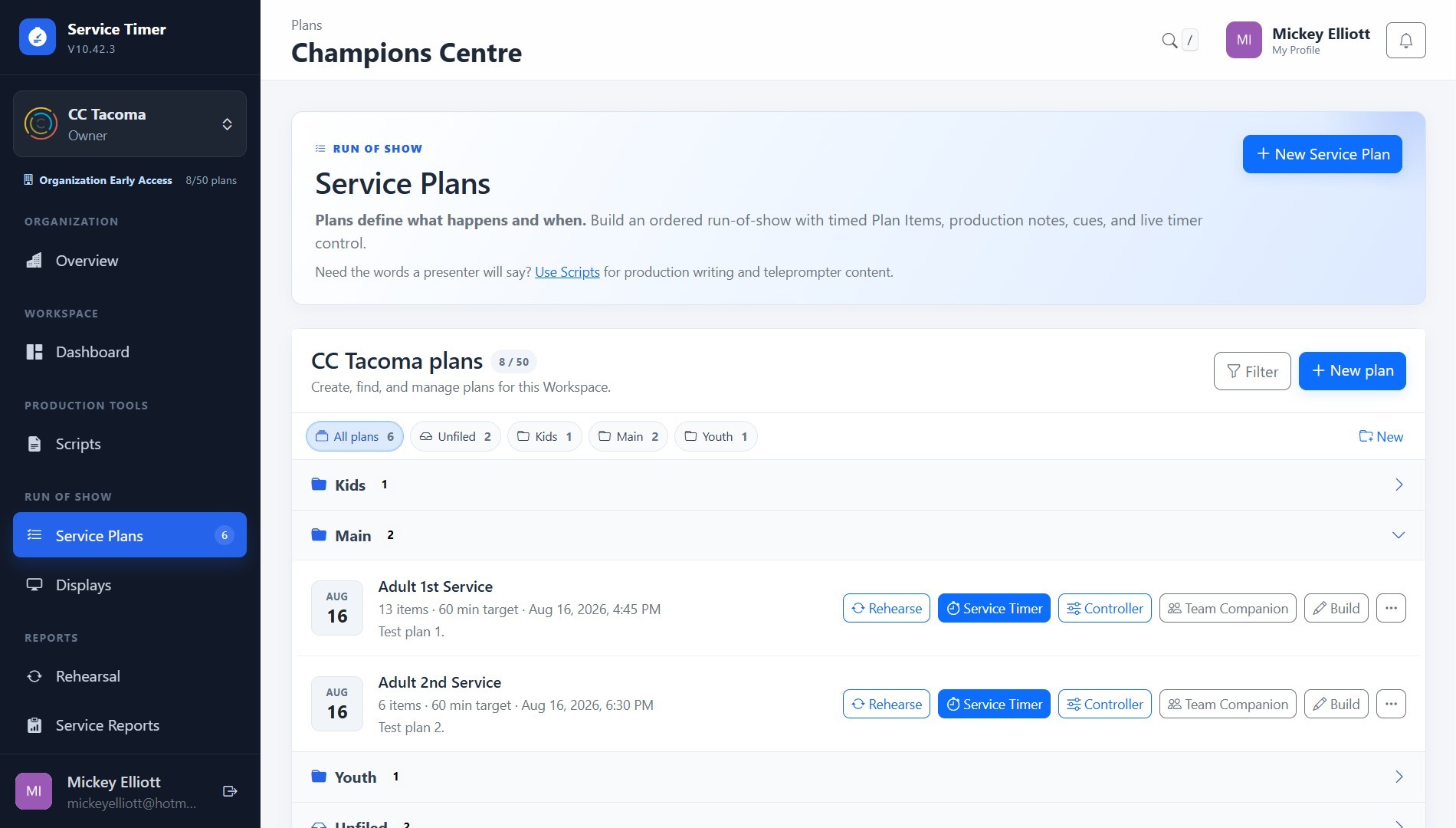
Open guide tutorialBuild the run of show, organize Plans into folders, and launch the live production surfaces without duplicating Live status UI.
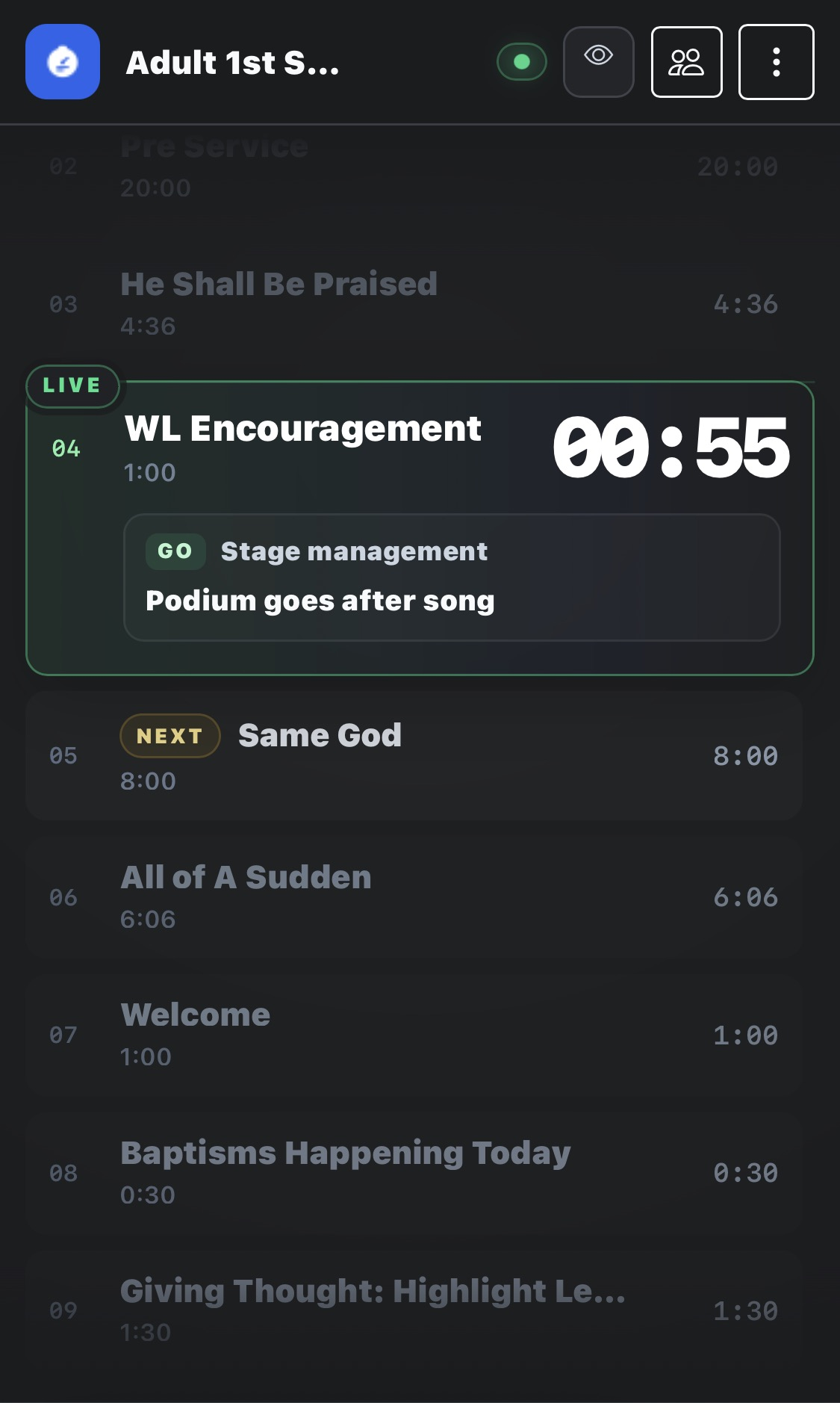
Open guide tutorialUnderstand the persistent Live indicator, concurrent services, operator health, and how Live state is shared across ServiceTimer.
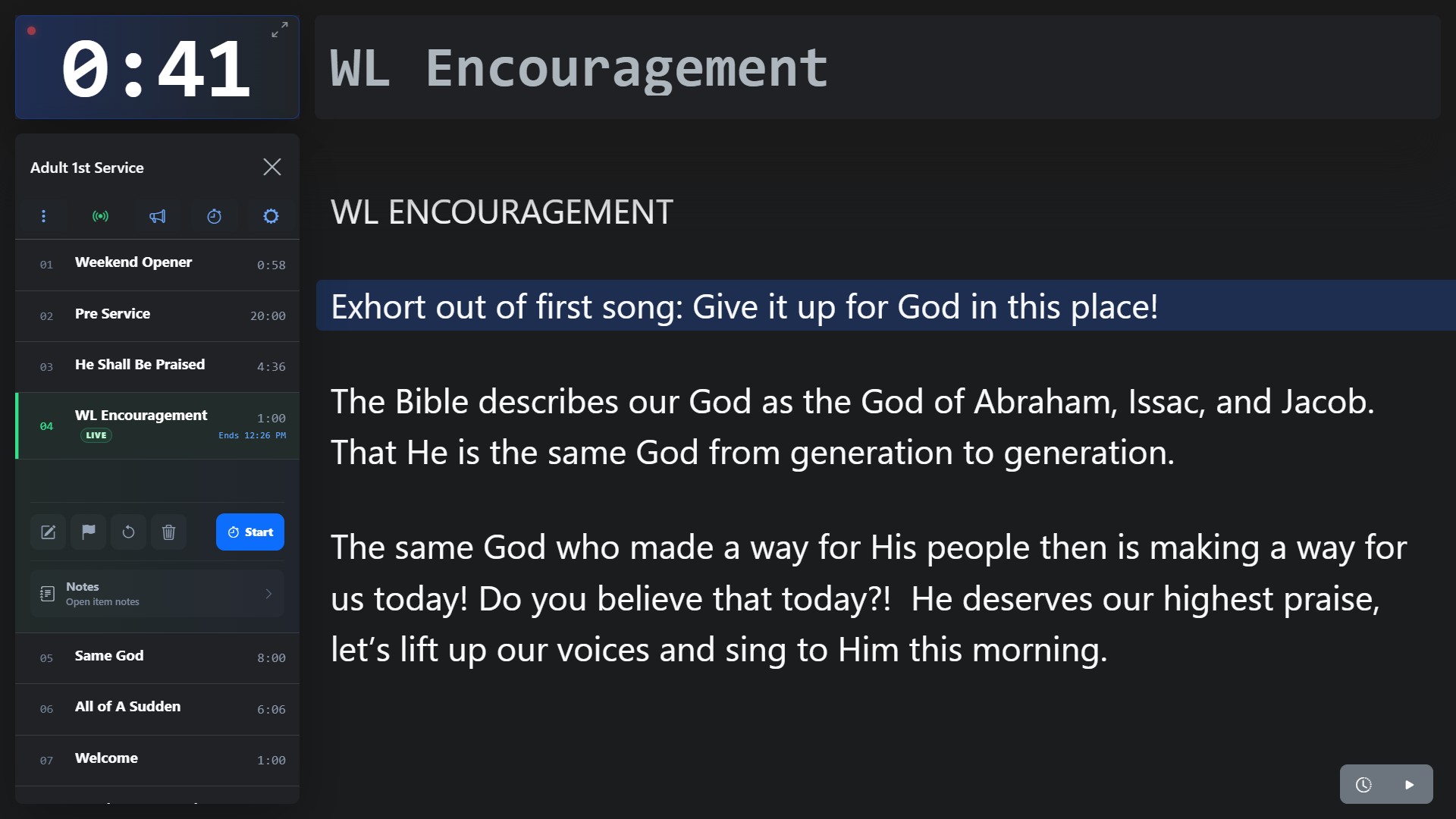
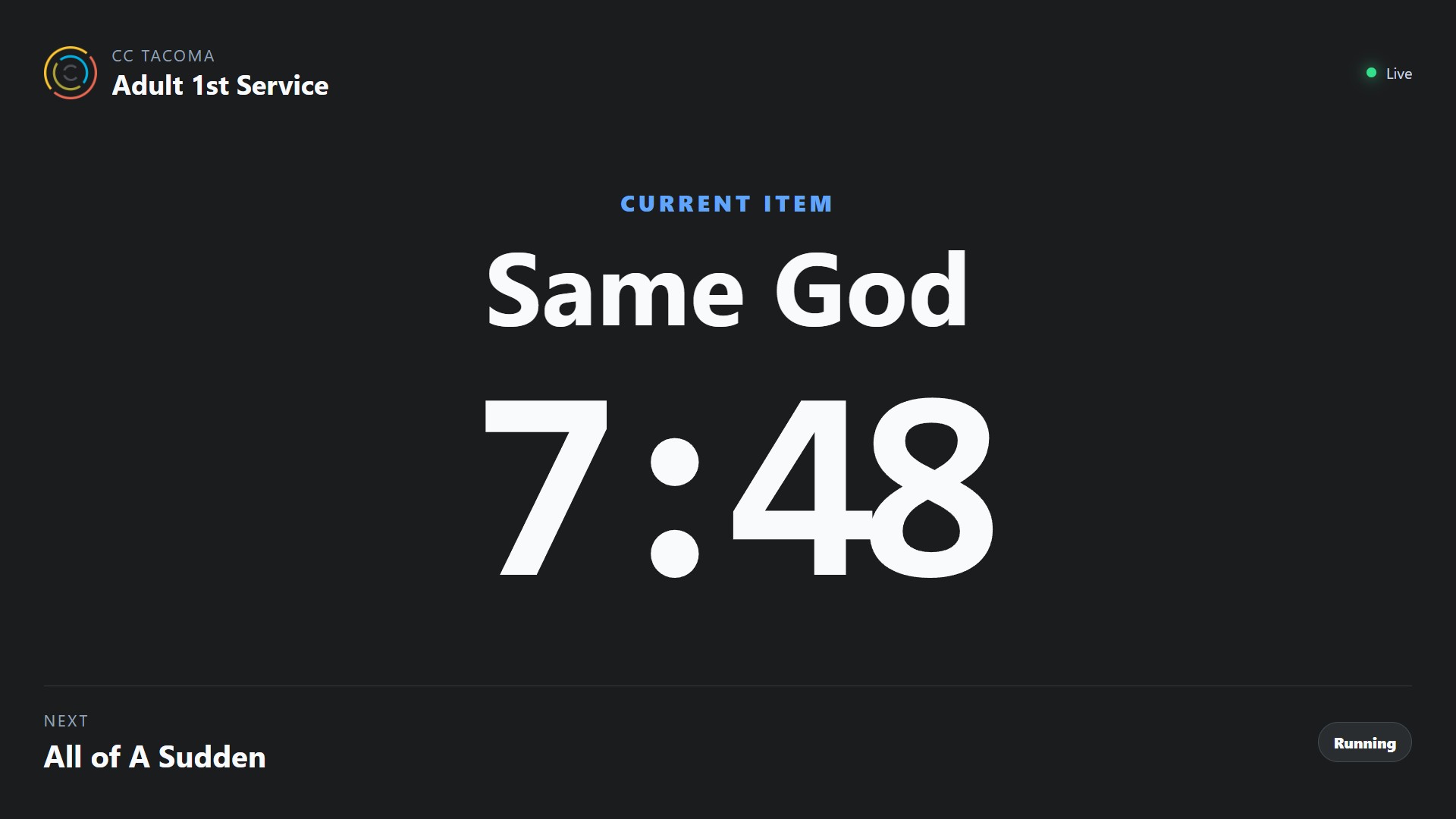
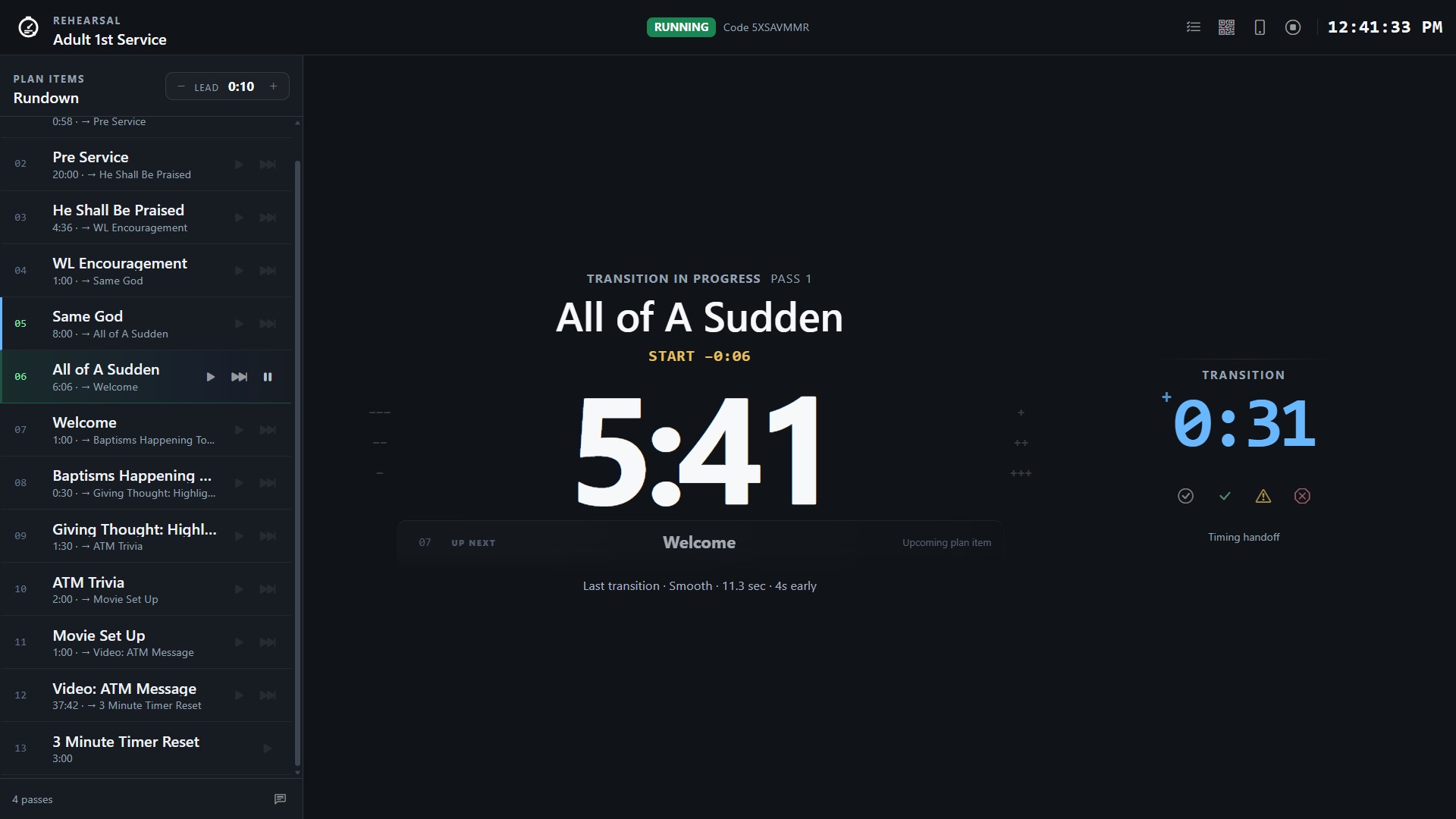
Open guide tutorialOperate the authoritative live countdown, stage notes, Team Ready screen, alerts, auto-advance, overtime, and manual service ending.
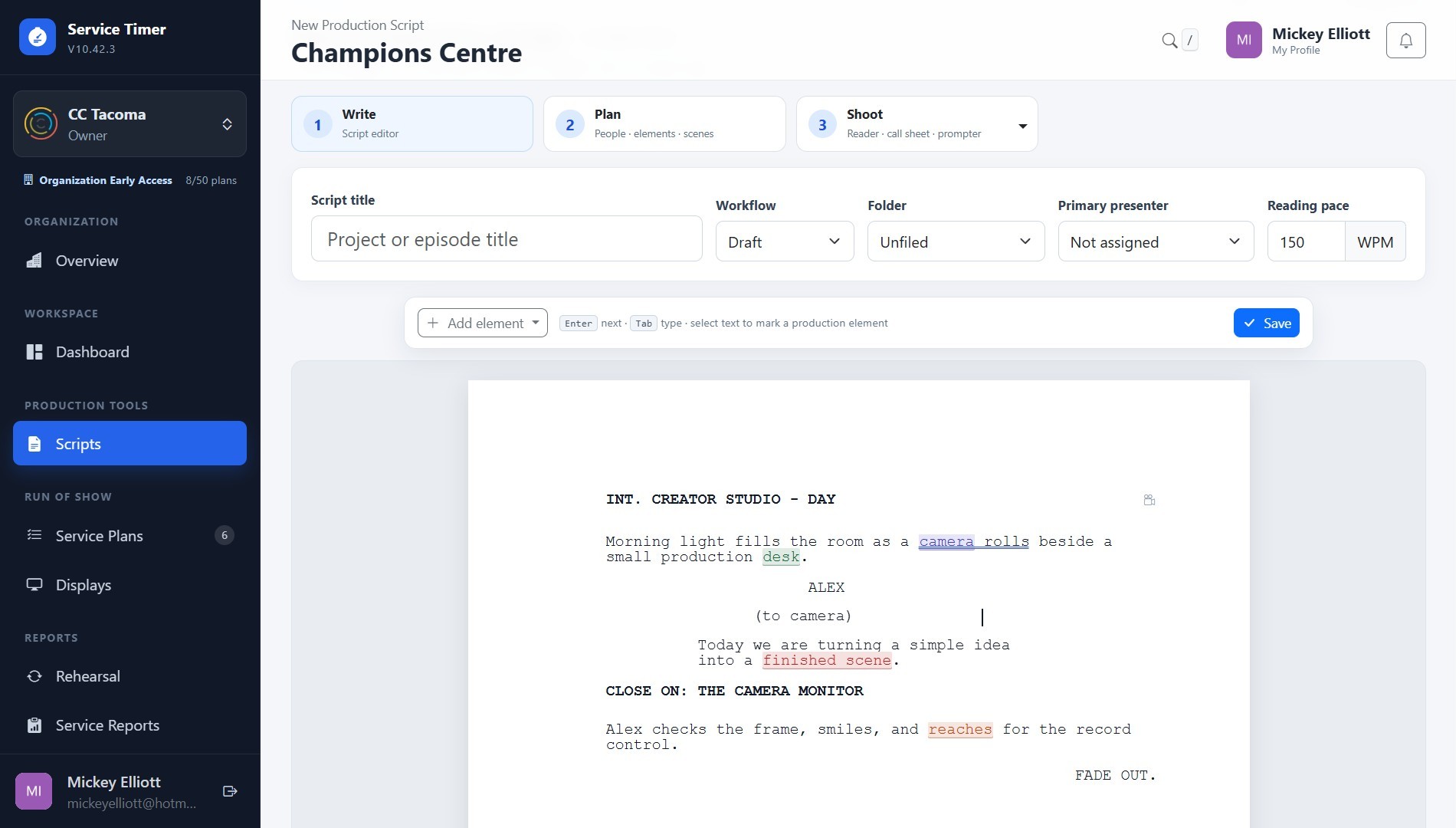
Open guide tutorialCreate structured Production or A/V Scripts, attach them to Plans, and stay aware when an attached Plan is currently Live.
Open guide tutorialPresent Script dialogue with controlled speed, sections, mirroring, and phone or keyboard remote control.
Open guideAccount setup, Dashboard orientation, and the fastest path into ServiceTimer.
Build Plans and Plan Items before the production goes live.
Operate Service Timer, Controller, Team View, Scripts, Prompter, and Displays.
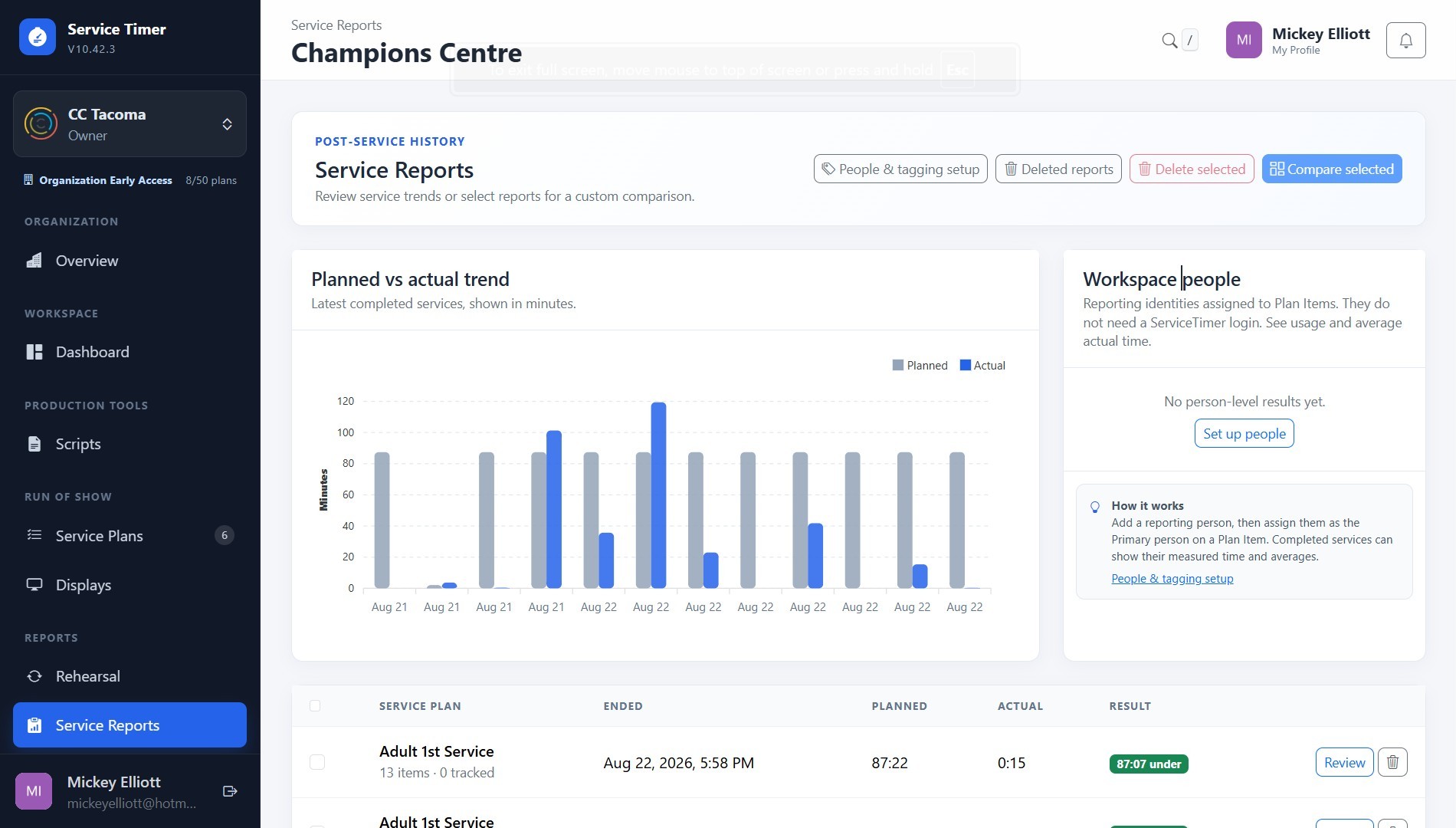
Review timing, reporting metadata, and production outcomes.
Users, permissions, notifications, organization settings, and billing.
Keyboard shortcuts, release checks, and troubleshooting references.
Try a shorter feature name or production term.
Signed-in users can open a support request with Workspace and app-version context attached automatically.